

Subscribe to WHX Insights newsletter
Stay at the forefront of healthcare trends & innovations
While investors chase urban mega-hospitals, the continent's real transformation is happening in thousands of rural clinics that no one is watching.

African healthcare investment is shifting from urban mega-hospitals to strengthening Kenya's rural and mid-sized private clinic network, driving Universal Health Coverage (UHC) through sustainable community care.
The narrative around African healthcare investment has long focused on large urban hospitals and high-tech solutions. Yet the real opportunity lies elsewhere: in strengthening the thousands of small and mid-sized private healthcare facilities that form the backbone of Kenya's health infrastructure.
“Kenya cannot achieve Universal Health Coverage without strong and sustainable healthcare providers at community level,” says Cynthia Munene, Chief Executive Officer of the Rural & Urban Private Hospitals Association of Kenya (RUPHA). “Private healthcare facilities serving rural and medically underserved communities should not be seen only as businesses or as alternatives to the public sector. Many are essential pieces of community health infrastructure and, in some areas, are among the most accessible points of care for patients.”

For investors and distributors eyeing the Kenyan market, the opportunity is not about building from scratch — it's about unlocking the potential of existing infrastructure. Private healthcare facilities already operate across Kenya's rural landscape, serving communities where public infrastructure may be overstretched. These providers understand local needs, have established patient relationships, and possess the operational agility that larger institutions often lack.
Munene is clear about the scale of the challenge: “The rural healthcare challenge is not caused by one issue. It is the cumulative effect of limited financing, shortages of skilled personnel, inadequate diagnostic capacity, expensive equipment, unreliable supply chains, infrastructure limitations, high energy costs, weak digital connectivity and delayed reimbursement for services already provided.”
Each barrier she identifies represents a commercial opportunity for the right partner.

“The next transformation in African healthcare will come from collaboration. Government, private providers, development partners, financiers and technology companies need to stop solving healthcare challenges in isolation.”
— Cynthia Munene, CEO, RUPHA
RUPHA's approach reveals where the most impactful investments lie. “Our work at RUPHA is increasingly about building an ecosystem around these providers—connecting them to affordable medicines, technology, diagnostics, financing, renewable energy, insurance, training, digital systems and supportive public policy,” Munene explains.
Collective purchasing models are already demonstrating results. Through initiatives like the RUPHA Drug Agency, independent hospitals aggregate their demand to negotiate better pricing on pharmaceuticals, medical consumables, oxygen, diagnostics, and equipment.
“One of the challenges facing an independent hospital is purchasing power,” Munene notes. “A large hospital network may negotiate favourable prices because of its volumes, while a small rural hospital buying the same medicine or consumable may pay considerably more.” RUPHA's solution? “Aggregate demand across member facilities so that hospitals can negotiate collectively rather than individually.”
For suppliers and distributors, this creates a structured pathway into hundreds of facilities simultaneously — reducing fragmentation whilst building reliable, long-term partnerships.
“Every saving achieved in procurement gives a healthcare provider additional room to maintain affordable patient prices, invest in staff, acquire equipment or improve quality. For facilities operating on very narrow margins, those efficiencies can be significant.”
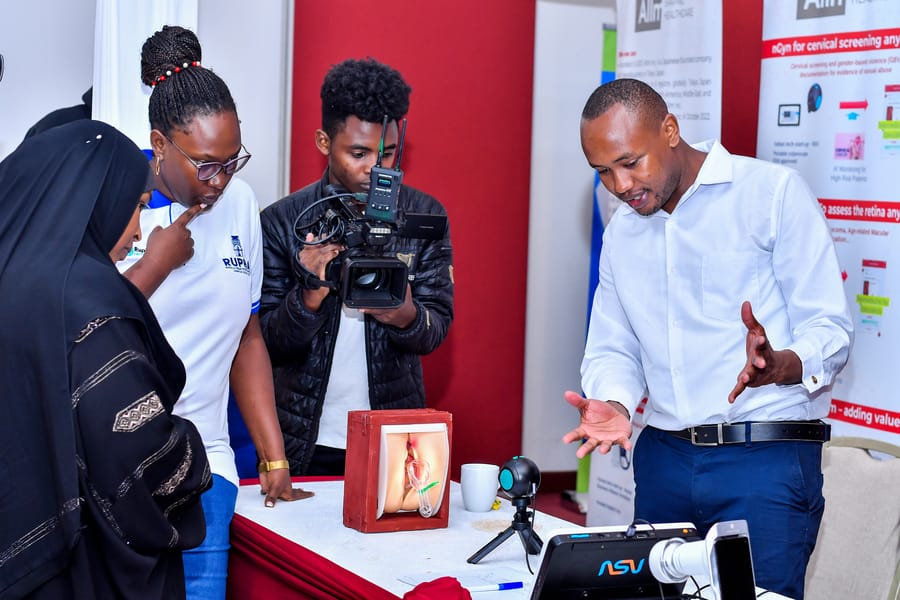
Medical equipment financing represents another significant opportunity. Munene highlights innovative approaches: “We are supporting Point-of-Care Ultrasound training and access to diagnostic equipment, including models where facilities do not necessarily have to make a large upfront capital investment. Revenue-sharing, lease-to-own and other structured financing approaches can make important technologies accessible to smaller facilities.”
Renewable energy solutions address one of healthcare's largest operating costs. “We are promoting solarisation and alternative energy financing, which can reduce one of the major operating costs for hospitals,” says Munene. This not only reduces expenses but ensures uninterrupted power for critical medical equipment — a fundamental requirement for quality care.
Digital health infrastructure is transforming operational efficiency. RUPHA's health information system initiative, RUPHAsoft, demonstrates the demand for affordable, interoperable digital solutions. “Digital health has the potential to remove geography as one of the barriers to quality healthcare,” Munene observes. “For rural facilities, a good digital health system can improve patient records, billing, pharmacy and inventory management, clinical decision-making, claims processing, financial management, reporting and communication with other providers.”
Kenya's healthcare financing transformation creates a more predictable commercial environment. The push towards Universal Health Coverage means government is increasingly recognising private providers as strategic partners rather than supplementary options.
“The next stage is to move from viewing private providers as supplementary providers to recognising them as strategic partners in Universal Health Coverage,” Munene emphasises. She outlines several structural changes needed: “Strategic and predictable healthcare purchasing. Facilities cannot provide sustainable care when reimbursement is uncertain, delayed or below the actual cost of delivering quality services. Contracting, tariffs, claims management and payment timelines need to be transparent and predictable.”
For businesses, this signals a maturing market with clearer rules of engagement.
“RUPHA sees UHC as an ecosystem in which government provides stewardship and oversight while public, faith-based and private providers contribute their infrastructure, workforce and innovation toward a common national health objective.”

The convergence of policy reform, digital transformation, and innovative financing creates a unique entry point for investors and suppliers. Kenya's healthcare market is not waiting for foreign solutions — it's actively building the infrastructure to absorb them effectively.
Munene's philosophy aligns commercial success with social impact: “Affordability for the patient and sustainability for the provider must be addressed together. A healthcare facility that continuously provides services below cost will eventually reduce services, compromise quality or close — and that ultimately reduces access for the community.”
She adds: “Affordability cannot simply mean asking the provider to charge less. We have to reduce the underlying cost of delivering care.”
The facilities RUPHA represents are not charity cases requiring subsidies. They are viable businesses operating in underserved markets, seeking partnerships that reduce their cost structures whilst expanding their capacity. They represent consistent demand, established distribution networks, and deep community trust.
The message from Kenya's healthcare sector is clear: the next wave of growth will not come from isolated interventions but from integrated ecosystems. Suppliers who understand this — who see themselves not merely as vendors but as partners in building sustainable healthcare infrastructure — will find receptive, motivated customers.
“If we can make the provider stronger, more efficient and more sustainable, we ultimately make healthcare more accessible, affordable and resilient for the patient,” Munene concludes. For dealers, distributors, procurement experts, and investors, that collaboration represents not just an opportunity to enter the Kenyan market, but to help shape the future of healthcare across Africa's rural communities.
The infrastructure exists. The demand is proven. The partnerships are forming. The question for global healthcare businesses is simple: will you be part of this healthcare revolution?

While major investments traditionally focus on urban mega-hospitals, thousands of small-to-midsize rural and community private facilities form the core of Kenya's health infrastructure. Upgrading these existing facilities with medical equipment, digital platforms, and reliable supply chains offers immense untapped market potential for investors and distributors.
The Rural & Urban Private Hospitals Association of Kenya (RUPHA) aggregates independent and rural private healthcare providers into a unified ecosystem. RUPHA helps member facilities negotiate bulk purchasing power, adopt digital tools (like RUPHAsoft), and integrate into Kenya’s Universal Health Coverage (UHC) strategy.
Through collective purchasing initiatives like the RUPHA Drug Agency, independent clinics pool demand to secure better margins on pharmaceuticals, consumables, and diagnostics. Furthermore, flexible medical equipment financing—such as revenue-sharing and lease-to-own models—helps providers acquire technologies like Point-of-Care Ultrasound without huge upfront capital.
Digital health infrastructure, including specialized systems like RUPHAsoft, bridges geographical barriers by streamlining patient records, pharmacy management, inventory, billing, and claims processing. This significantly lowers operating costs while improving quality of care and financial predictability.
Global healthcare businesses can partner directly with integrated provider ecosystems like RUPHA rather than negotiating with fragmented individual clinics. Engaging through collective purchasing, equipment leasing, and renewable energy financing provides a direct, scalable channel into hundreds of facilities simultaneously.

WHX Nairobi
Sep 16, 2026 TO Sep 18, 2026
|Nairobi, Kenya
Join us at WHX Nairobi—East Africa's #1 healthcare event. WHX Nairobi unites thousands of healthcare professionals under one roof to learn, trade, and network. It provides a platform to showcase healthcare innovations, attract investment, and position Kenya as a regional medical hub.