

Subscribe to WHX Insights newsletter
Stay at the forefront of healthcare trends & innovations
Africa’s digital health market is projected to grow at 23.4% CAGR through 2030, and bundled care in Nigeria may become the mechanism that closes that gap.
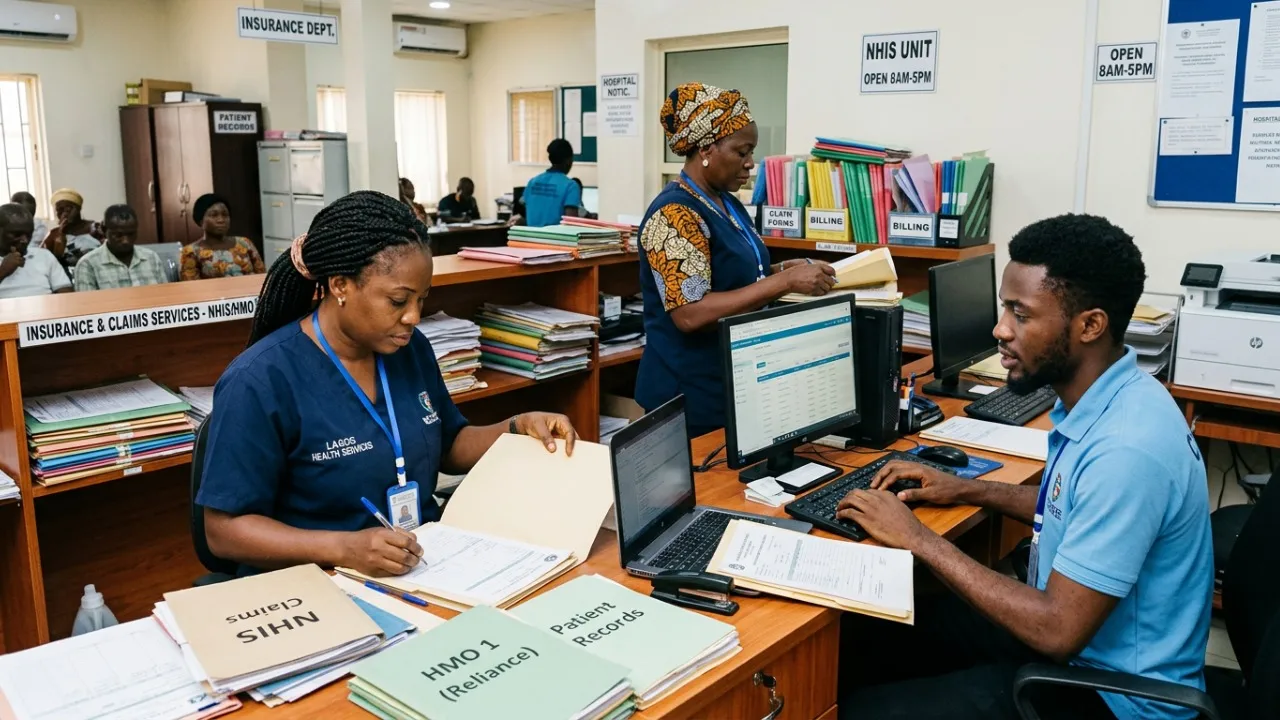
If you distribute medicines, set health policy, manufacture medical products, or sell into Nigeria's healthcare market; the micro-health insurance shift now underway is not a peripheral story.
It is fast becoming an infrastructure decision that will determine who controls the next decade of health commerce in Nigeria.
Nigeria has more than 21 million people on health insurance, up from under 17 million in early 2024. But the number is less important than what is changing beneath it. Traditional health insurance paid a hospital bill. What is emerging now is structurally different: micro-insurance that coordinates an entire care journey; teleconsultation, prescription, pharmacy fulfilment, and doorstep delivery as a single subscription.
The 2022 National Health Insurance Act mandated coverage for all Nigerians, including the 76.7% in informal employment. That policy pressure, combined with smartphone penetration and a maturing health tech ecosystem, created the conditions. Companies like WellaHealth, DRO Health, and Zuri Health are already building it.
“The first 20 million insured Nigerians were the easier population to reach. The next phase — informal workers, rural populations, and low-trust markets will require completely different operating models."
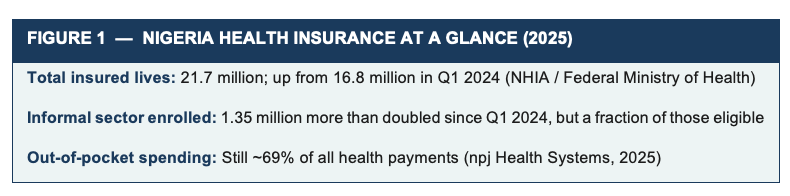
Africa’s digital health market is projected to grow at 23.4% CAGR through 2030. Nigeria is not yet keeping pace and bundled care may become the mechanism that closes that gap.
In practice, the model compresses multiple disconnected healthcare steps into a single coordinated workflow:
Member pays a monthly micro-premium.In some cases under ₦1,000 for condition-specific plans
App or USSD connects patient to a clinician for consultation and digital prescription
Prescription is routed to a verified partner pharmacy; cutting out unregulated supply channels
Medication is delivered to the patient's door or a community pickup point, same-day
The real value is not convenience alone. It is the elimination of costs that stop most Nigerians from seeking care; transport, lost income, counterfeit drug risk. WellaHealth's network covers over 2,000 partner pharmacies. The model works in Lagos. The test is whether it works in Kano, in Owerri, in the markets that matter most.
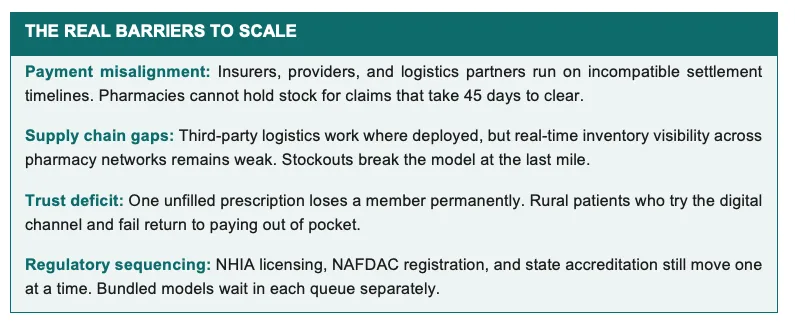
The barriers to scale are not technological. They are coordination failures that directly affect every player in this supply chain.
The next phase will not be decided by who sells the most policies but by who builds the most reliable networks behind them. Two futures are available:
If integration works, primary care becomes digitally distributed, pharmacies become frontline care nodes, and Nigeria produces a replicable model the continent will study. If it stalls, urban areas gain while rural populations keep paying out of pocket, pilots remain fragmented, and trust in insurance erodes further among the workers it was designed to reach.
The infrastructure being built for bundled micro-insurance; pharmacy networks, last-mile logistics, digital prescription rails, payment interoperability will define pharmaceutical distribution and health data access in Nigeria for the next decade.
The companies positioning inside these networks now are not just entering an insurance story. They are staking a claim in the operating layer of Nigeria's healthcare system.
As Nigeria's healthcare infrastructure shifts, connecting with the right innovators, pharmacy networks, and policy leaders is crucial. Join over 500+ exhibitors and 8,000+ medical professionals at West Africa's leading healthcare exhibition. Register your free spot for World Health Expo Lagos here to secure your place in the future of African health commerce.
The question is no longer whether bundled care will emerge in Nigeria, but which players will control the infrastructure and networks beneath it.
The shift is primarily driven by the 2022 National Health Insurance Act (NHIA) which mandates coverage for the informal sector, combined with rising smartphone penetration and mature health-tech ecosystems. Unlike traditional models that only cover hospital bills, bundled care coordinates teleconsultation, digital prescriptions, and same-day medication delivery into a single subscription, eliminating out-of-pocket barriers like transport and counterfeit drug risks.
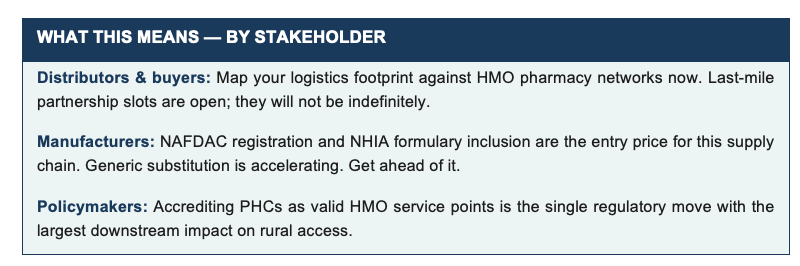
It fundamentally changes the supply chain. As primary care becomes digitally distributed and pharmacies turn into frontline care nodes, manufacturers must secure NAFDAC registration and NHIA formulary inclusion to enter these high-volume networks. Distributors must rapidly map their logistics footprint against HMO partner networks to secure highly competitive last-mile partnership slots.
The primary barriers are coordination failures rather than technology. These include payment misalignment (incompatible settlement timelines between insurers and pharmacies), a lack of real-time inventory visibility across pharmacy networks causing last-mile stockouts, a trust deficit among rural consumers when service fails, and siloed, unsequenced regulatory processes across state and federal bodies.
Yes, health insurance is available and legally mandated under national policy for all citizens. While formal public and corporate sectors are well-served by established Health Maintenance Organizations (HMOs), the market is rapidly deploying digital micro-insurance models to reach the underserved informal workforce.
The optimal provider depends entirely on operational requirements. The market's top-tier HMOs are evaluated by distinct strengths: some lead in physical hospital network scale, others excel in digital-first prescription and telemedicine workflows, while some differentiate through efficient provider payment settlement timelines.
Looking for more insights on healthcare adaptation, policy leadership, and infrastructure evolution? You can discover our latest articles, magazines, and exclusive market reports. Click here to browse the full World Health Expo Healthcare Management insights hub and keep your organisation informed.
WHX Lagos
Jun 1, 2027 TO Jun 3, 2027
|Lagos, Nigeria
Join us at WHX Lagos—the gateway to the West African healthcare market. WHX Lagos connects healthcare professionals with leading exhibitors from the West African region and beyond. Whether you're on the hunt for a new product or service, want to learn from world-renowned speakers, or expand your professional network, WHX Lagos has everything you need to thrive in the region's medical industry.