

Subscribe to WHX Insights newsletter
Stay at the forefront of healthcare trends & innovations
June 24, 2026
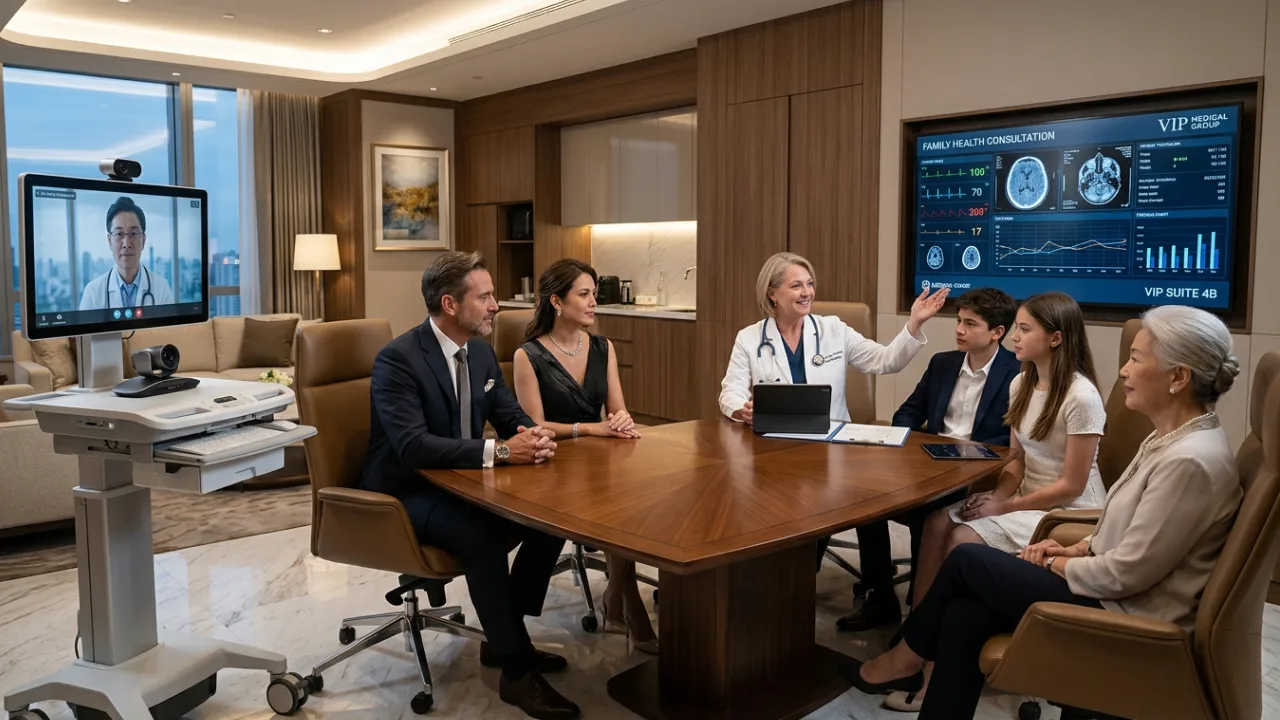
With only 15% of healthcare digitised globally, family offices are stepping in to back the next wave of innovation.
Most healthcare founders who think about raising venture capital (VC) immediately look to traditional investors. However, another method of financing, which requires less aggressive tactics is emerging, and founders who dismiss it might overlook the most important relationships that could help them build a successful startup.
Family offices, which have traditionally been associated with safeguarding the fortunes of wealthy individuals, are now beginning to play a more active role in health tech startups. Reports indicate that around the world, there are approximately 10,000 family offices and, according to some estimates, the amount of money these hold surpasses the capital raised by venture capital, hedge funds, and private equity combined. In the GCC alone, there are more than 1,500 family offices.
At the recent edition of WHX Tech, the panel discussion ‘How family offices are redefining healthcare investment’ put the spotlight on this trend. Panellist Dr Stephan Shaya, Managing Director of Akkad Holdings and a physician-turned-investor whose family built a US$5.8 billion biotech and life sciences vertical, describes his office's philosophy as distinctly mission-driven. "The mantra of the family office is very mission-driven — people, purpose, pay it forward," he explained. "It is a way for us to make catalytic investments in things that could make a difference in the world."
That ethos stands in sharp contrast to the return-at-all-costs logic of traditional venture. Ida Beerhalter, Investor and Co-CEO of IOME Family Office in Germany, said, "If it has a headline, we are not interested. But if it's a gold rush, we bring the shovels and the buckets." She added that IOME deliberately avoids sector hype, instead prioritising investments that yield social and economic returns alongside financial ones.
Unlike VCs, which usually seek efficiency and quick exits, family offices view founders from a completely different perspective that centres on measuring alignment.
Eesha Khader, Director of Investments at AKG Investment in the UAE, framed it in terms of character under pressure. "Founders and entrepreneurs, more often than not, find themselves at crossroads where they have to make some really difficult choices," she said. "When things fall apart, which they inevitably will, how are they going to show up?"
In healthcare specifically, family offices also weigh clinical credibility, regulatory readiness, and the quality of a founder's professional network. Sameer Mehta, Chairperson of Atlas Family Office in India, noted that in healthcare investing, "you actually need deep skill" — which is why his office co-invested in its first biotech deals alongside families who already understood the space, bringing in physicians and CFOs to evaluate opportunities.
What sets family offices apart most compellingly is the value they provide beyond funding. Christopher Aw, Principal of Pandan Investments, highlighted the strategic intelligence angle: "You always want to look at what's replacing your own industries. If I have a very traditional family-operating business, I want to know what technologies might be disrupting it before I get disrupted."
For health tech founders, this means a family office investor may come equipped with decades of sector relationships, operational infrastructure, distribution channels, and regulatory know-how that a VC firm might not be able to match.
Building those connections often extends beyond the boardroom. Bringing together startups, family offices, healthcare providers, and technology experts, WHX Tech provides a platform to explore emerging opportunities in digital health and develop trusted relationships that often drive long-term growth.

In the GCC, where trust networks and relationship capital are often the difference between a deal and a door closing, this is not a small thing. Beerhalter said, "If you're in and they trust you, they might not invest in your company, but they might introduce you to somebody who might invest in your company."
Shaya points to another structural advantage: family offices are filling a critical gap in the GCC's capital stack. He said, "Family offices have a lot of opportunities to step in, particularly in the GCC — the level of innovation is very high here, and the valuations are very reasonable relative to the US."
In his view, a savvy family office that can identify top-tier GCC health tech companies and help them access global markets, particularly the U.S., has a unique opportunity.
Despite the opportunity, founders routinely misread the room when approaching family offices. The most common mistake is treating the engagement transactionally. "Everything moves at the speed of trust," added Shaya. "If you approach things in a transactional way, your chances of success are not going to be great."
Beerhalter emphasised, "I always say the first meeting with us is like a first date — the goal of the first date is to get a second date. Some people come to us, and you have the feeling they expect you to write a cheque after 10 minutes. It will not happen." Her advice to founders: don't pitch, court. Develop the relationship.
Khader said that family offices are not VC firms with standardised term sheets and quarterly review cycles. They are families, with their own histories, values, and blind spots. Founders who take time to understand the family's goals, sector biases, and long-term thesis will outperform those who lead with a deck.
Family offices have special significance for the founders of health tech firms in the GCC. The region's economy is shifting away from its old oil- and property-based wealth toward industries such as artificial intelligence, biotechnology, and digital healthcare.
Khader articulates why healthcare is not optional for GCC family offices building future-proof portfolios: "We're moving from services to infrastructure. Reportedly, only 10% to 15% of healthcare is currently digitised; that leaves a massive space for families to come in and tap into." For founders in femtech, diagnostics, therapeutics, and digital health, that space is an invitation.
But getting in is not about making a quick deal. It is about building real relationships and sharing values. As Beerhalter concluded, the right family office is out there. Founders who connect with them are usually the ones who show up early and wait patiently.
Family offices are investing in health tech in the GCC because the region is still largely under-digitised, creating a major growth opportunity. Government strategies like Vision 2030 are accelerating healthcare transformation, while family offices prefer patient, long-term capital that fits the slow regulatory nature of health tech. The sector also offers both strong financial returns and meaningful social impact.
In the investing world, a family office is a private wealth management advisory firm that handles the investments and trusts of ultra-high-net-worth (UHNW) individuals or families. In the GCC region, family offices are fundamentally redefining digital health by shifting from traditional real estate or oil assets toward high-impact technology. They provide the "patient capital" required for long-term clinical trials and regulatory approvals, transforming how healthcare solutions are funded and scaled in the Middle East.
Historically, family offices usually invest in stable, tangible assets like real estate, private equity, and sovereign bonds. However, there is a massive generational shift toward family office investment in tech. They are heavily investing in health tech now because the post-pandemic landscape, combined with regional government initiatives like Saudi Vision 2030 and UAE Centennial 2071, has made healthcare a sovereign priority. It allows families to generate strong financial returns while creating a lasting social legacy.
To unlock capital, founders must showcase how they utilize AI (Artificial Intelligence) to solve specific regional healthcare challenges, such as chronic disease management or localized genomic data analysis. GCC family offices are highly interested in scalable digital health in the GCC that offers operational efficiency—like AI-driven diagnostics or predictive patient care. Demonstrating robust data privacy compliance alongside a clear AI value proposition is the fastest way to build trust with regional investors.
For a family office, knowing how to invest in health tech requires moving away from short-term venture capital mindsets and focusing on strategic, trust-based partnerships. Family offices can invest via direct investments in late-stage startups, co-investing with specialized healthcare funds, or participating in dedicated regional tech accelerators. The key to success in this sector is aligning the investment with local healthcare regulations and hospital distribution networks.
The Middle East Family Office Investment Summit (and the prestigious Global Family Office Investment Summit Dubai) serves as the premier bridge between tech innovators and private wealth owners. For health tech founders, these summits are not just networking events; they are the ultimate venues to build institutional trust. Since GCC investment decisions are deeply rooted in personal relationships, pitching at these summits allows founders to initiate the long-term rapport needed to unlock substantial funding.
Ultimately, the strategic rise of family offices is unlocking a new era of growth for digital health and medical device ecosystems. Staying ahead of these shifting dynamics, local regulatory frameworks, and market entry strategies in the MENA region is essential for global healthcare leaders. For deeper data-driven reports and expert insights into the innovations driving the industry forward, visit the medical technology insights hub.

WHX Tech
Jan 26, 2027 TO Jan 28, 2027
|Dubai, UAE
Join us at WHX Tech in Dubai—where digital healthcare innovation meets real-world impact. WHX Tech brings together healthcare leaders, tech innovators, and investors to tackle the industry's biggest challenges and shape the future of healthcare.