Subscribe to WHX Insights newsletter
Stay at the forefront of healthcare trends & innovations
Agentic AI solutions can help relieve the burdens that impact diagnostics.
Diagnostic error is one of the biggest killers in the developed world. So why are healthcare systems so reluctant to apply AI tools proven to reduce cases? Gulf nations, however, are scaling medical AI solutions. This means groundbreaking case studies for reducing diagnostic error could soon come from the UAE, Saudi Arabia, or Qatar.
Diagnostic error is a silent killer. In short, it occurs when doctors miss, delay, or misdiagnose medical conditions. And it is more prevalent than youwould think. Decades of post-mortem research also indicate that diagnostic errors contribute to approximately 10% of patient deaths.
It is affecting some of the world’s most advanced healthcare systems. In the United States, delirium screening tools often misclassify Spanish-speaking patients. While in the EU, 1.1 million deaths among people under the age of 75 were considered avoidable by early treatment.
A British patient, Jessica Brady, contacted her GP on more than 20 separate occasions after feeling unwell. After failing to receive a prompt diagnosis, she sadly died from advanced-stage four cancer. Following the tragedy, NHS England launched Jess’s Rule, a three-step plan that urges GPs to “think again” if they see a sick patient three times without reaching a diagnosis. But I think this response misses the point.
Doctors need more resources, not guidelines. For every hour your doctor spends with you, they spend two hours doing paperwork. And medical knowledge doubles every 73 days, meaning doctors must retain more information than previous generations. These issues will become more acute in countries with growing, ageing populations. Despite this, overworked doctors are expected to deliver the same level of care.
We know that agentic AI solutions help relieve the burdens that cause diagnostic error. In clinical studies, agentic AI tools led to a 60% reduction in documentation time, and error rates were reduced from 8.3% to 3.1%.
Clinical tools can record and transcribe patient-doctor conversations, summarise the consultation, and generate documentation such as notes or referrals. Importantly, the technology also acts as a second doctor in the room. It queries clinicians on their decisions, which is crucial, because that decision might just be the wrong one.
So why aren’t AI tools being implemented throughout the most advanced healthcare systems? Technology companies are blocked by red tape, outdated medical regulations, and over-judicious decision-makers.
In the EU, AI-enabled medical devices, are classified in the highest risk bracket for medical devices. Similarly, in the UK, AI tools generating clinical notes must be registered as medical devices, even if the products use well-known large language models like ChatGPT. This prevents doctors from using AI assistants for note taking unless they receive a complete medical device certification.
Gulf nations, on the other hand, are encouraging AI adoption. They are implementing sensible regulations that balance patient security with enhanced care. Speaking from experience, scaling Rhazes in Qatar was quicker, better supported, and much more cost-effective. It is a similar story in the UAE. The Ministry of Health and Prevention has created a dedicated AI Office to govern national rollouts, track outcomes, and integrate predictive models into everyday care.
But importantly, this potential is going to scale up massively throughout 2026. Microsoft's latest AI Diffusion report reveals that Gulf nations are leading global AI adoption. The UAE ranks first, with 59.4% of working-age adults reportedly using AI. Qatar and Saudi Arabia also appear in the top half of adopters.
But it is not just AI adoption that will boost medical care in the Gulf. The UAE’s government recently appointed an AI minister for every department, including health. And the nation’s underlying infrastructure is poised for a massive boost. Microsoft alone has announced it will invest over US$15 billion in the UAE and secured an export licence to bring Nvidia chips into the country.
Paired with sensible regulation, these investments will better enable Gulf states to apply agentic AI throughout their healthcare systems in coming months. In fact, I think we will see more research, medical trials, and medical case studies indicating that AI has the biggest potential to tackle diagnostic error.
I recognise that AI is not foolproof. The tech has been known to hallucinate and produce inaccurate information. But not when these tools are paired with humans. Because ultimately, I am not calling for a replacement for doctors. I am calling for the bare minimum, to ensure doctors just have the tools to do their job.
We know that doctors are overwhelmed by their increasing workloads, and we know this is a leading cause of diagnostic error. So why are healthcare providers sitting on their hands? It is up to Gulf nations to demonstrate that AI is safe for clinical use and set a global benchmark for AI in healthcare.
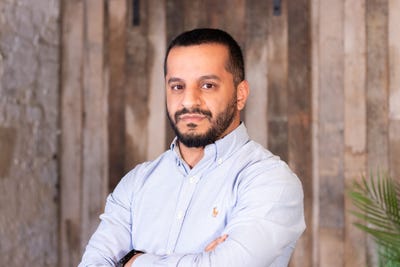
Dr Zaid Al-fagih is the Co-Founder and CEO of Rhazes AI