Subscribe to WHX Insights newsletter
Stay at the forefront of healthcare trends & innovations
The "augmented clinician" role is set to reduce burnout and redefine the skills needed for the next generation of healthcare workers.
April 16, 2026
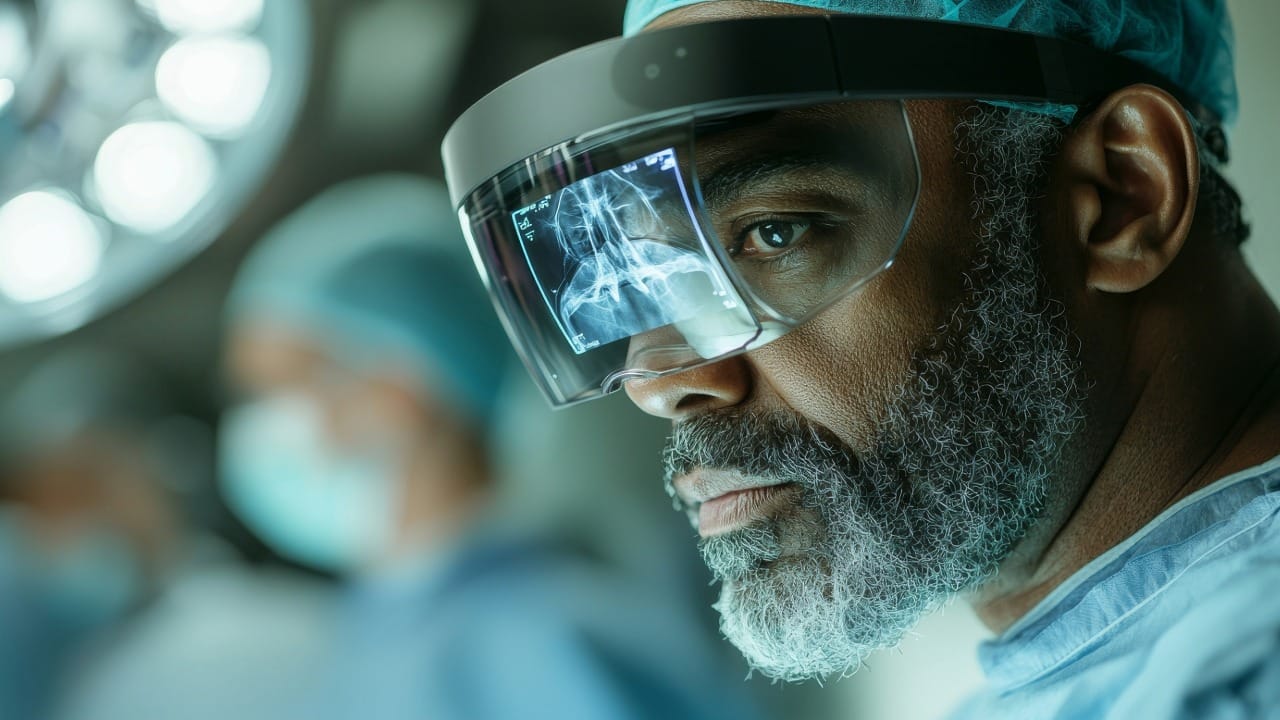
Will artificial intelligence (AI) take the place of your friendly doctor? People ask this question out of both curiosity and worry, and the short answer is no. But the more important answer is that AI is already changing what it means to be a doctor, nurse, administrator, and healthcare leader. Technology is not a threat to care; however, it may be its most powerful ally yet.
Healthcare systems all over the world are dealing with several problems that are all getting worse at the same time: an ageing population, more chronic diseases, higher drug and treatment costs, and a lack of skilled workers. The World Health Organisation says that by 2030, there will be a shortage of almost 10 million doctors, nurses, and midwives worldwide, even as the need for care continues to grow. At the same time, doctors and nurses are getting burnt out because they have to do so much paperwork, billing, and compliance work that can take up to 70% of their time.
In this situation, just training more doctors is not enough. Healthcare leaders also need to think about how they use the clinical time and knowledge they already have. This is where AI really makes a difference.
Even though the headlines are dramatic, AI is not going to "replace" doctors.
Medicine is not just a scientific problem. It is a very human thing to do, based on empathy, trust, moral judgment, and an understanding of the situation. AI can help doctors by making their jobs easier and giving them more power.
Predictive, generative, and analytical AI systems are great at tasks that people find time-consuming or overwhelming, such as finding small patterns in large datasets, analysing medical images with accuracy, synthesising large volumes of clinical literature, and streamlining workflows. When used correctly, these tools help doctors and nurses focus on what matters most—caring for patients.
This is why many healthcare organisations are backing the idea of the "augmented clinician", a professional whose skills are enhanced, not diminished, by AI. In this model, AI is like a second set of eyes, a research assistant that is always on, and a way to make clinical practice more efficient.
McKinsey's research on how to scale AI in healthcare identifies three main stages of adoption.
Phase 1: The focus is on administrative tasks like automated documentation, scheduling, coding, claims processing, and imaging analysis. These applications are already making it easier for doctors to do their jobs.
Phase 2: AI will be used in both clinical settings and home care. Remote monitoring, AI-powered alerts, virtual assistants, and natural language processing tools will help people get help faster and gain more control over their health. Clinicians and regulatory bodies need to be more involved and work together in this phase.
Phase 3: The most significant change occurs here, where evidence-based AI-driven clinical decision support is integrated throughout the healthcare value chain — from education and research to diagnosis, treatment, and population health management.
The effect on the workforce across all three phases is not just about gaining or losing jobs; it's about how work is evolving in the industry.
Even though AI has a lot of potential, it brings along several challenges. The first one is trust. Understandably, doctors are wary about systems that could lead to errors or jeopardise their professional autonomy. This is why successful implementation must start with clear accountability frameworks and openness about how models work, so that professionals remain in charge of making decisions.
It is just as important to think about ethical and legal issues. AI systems need to follow rules on data protection and privacy, such as HIPAA, GDPR, and new regulations coming into effect in different parts of the world. Health systems must actively address risks associated with bias, explainability, and data security, particularly when models are trained on unrepresentative or inaccurate datasets.
AI is changing the whole healthcare workforce, not just doctors and nurses. At the crossroads of medicine, data science, and design, new hybrid roles are popping up. These include clinical informaticians, bioinformaticians, AI product leaders, data architects, and experts in how people and machines interact.
If jobs in healthcare are changing, medical education also needs to evolve. Future doctors will need to be trained in legal liability, data governance, bias reduction and AI literacy, which means knowing how tools work and where they go wrong, and making decisions by combining AI insights with clinical judgment. They will also need to apply ethical reasoning to ensure their decisions are fair, clear, and accountable.
So, in conclusion, will AI take the place of your doctor? No. But it will change what your doctor does. That change is both necessary and unavoidable.
Healthcare cannot survive in a world with huge shortages of workers and growing demand unless it gets smarter, more efficient, and more human all at the same time.
When applied ethically, augmented intelligence has the potential to help doctors spend less time on screens and more time with patients. It could allow health systems to grow their knowledge without compromising quality. And it opens up new career paths that combine medicine, technology, and ethics. It would enable people and machines to work together to provide better care for everyone on a large scale.

WHX Tech
Jan 26, 2027 TO Jan 28, 2027
|Dubai, UAE
Join us at WHX Tech in Dubai—where digital healthcare innovation meets real-world impact. WHX Tech brings together healthcare leaders, tech innovators, and investors to tackle the industry's biggest challenges and shape the future of healthcare.