

Subscribe to WHX Insights newsletter
Stay at the forefront of healthcare trends & innovations
Opportunity around the adoption of Agentic AI opens new doors for health tech startups and enterprise vendors.
May 7, 2026

Under the directives of His Highness Sheikh Mohammed bin Rashid Al Maktoum, Vice President, Prime Minister and Ruler of Dubai, the emirate is launching a new initiative to digitally transform its private sector towards the adoption of Agentic AI.
Recent initiatives approved in Dubai underline the pace of this shift. These include the launch of an AI Infrastructure Empowerment Platform, the creation of an AI Acceleration Taskforce, and new programmes designed to support the adoption of AI across government entities and the private sector.
The programme is expected to span two years and includes specialised training tracks for all business councils affiliated with the Dubai Chamber of Commerce and Industry. The Chamber has also been directed to establish incubators for Agentic AI in healthcare to support this transition.
Across the wider GCC, governments are investing heavily in AI as part of broader economic diversification and digital transformation agendas. The UAE’s advantage lies in the speed and structure of its implementation. By focusing on both the public and private sectors, while also investing in talent, infrastructure and start-up incubation, the country is creating an ecosystem that can support AI adoption at scale.
The initiative signals a new phase of digital transformation, where AI will be embedded into the core architecture of public and private sector operations. This will require stronger cloud environments, secure data-sharing frameworks, scalable infrastructure and systems that can support AI agents working across multiple departments and services.
In practice, this means technology leaders will need to rethink how organisations design, deploy and manage digital platforms. Cloud architects will be expected to build environments that are secure, flexible and capable of handling advanced AI workloads.
Infrastructure engineers will need to ensure that systems remain resilient, observable and compliant, particularly as AI becomes more deeply connected to citizen services, business licensing, healthcare, transport and public administration.
The UAE’s push towards Agentic AI will create demand for enterprise AI platforms, cloud services, cybersecurity tools, data governance solutions and integration partners. However, vendors will also be expected to meet higher standards. Government and enterprise clients will increasingly look for solutions that are interoperable, secure, explainable and capable of working across existing systems rather than operating in silos.
By combining central leadership, training, infrastructure support and private sector engagement, Dubai is building a model where AI adoption is not left to individual entities alone.
Dubai’s AI-native government ambitions are particularly significant for healthcare, where the emirate and the wider UAE are already positioning themselves as regional health-tech leaders. Abu Dhabi has been one of the clearest examples of this direction, with the Department of Health working with major technology and health tech partners, including Microsoft, to advance AI, data analytics and digital innovation across the healthcare ecosystem.
Healthcare systems depend on sensitive data, real-time coordination, strict regulation and trusted public services, which are the same foundations required for wider AI adoption across government. If implemented successfully, AI-led healthcare can set a benchmark for other sectors, from transport and education to licensing, urban planning and emergency response.
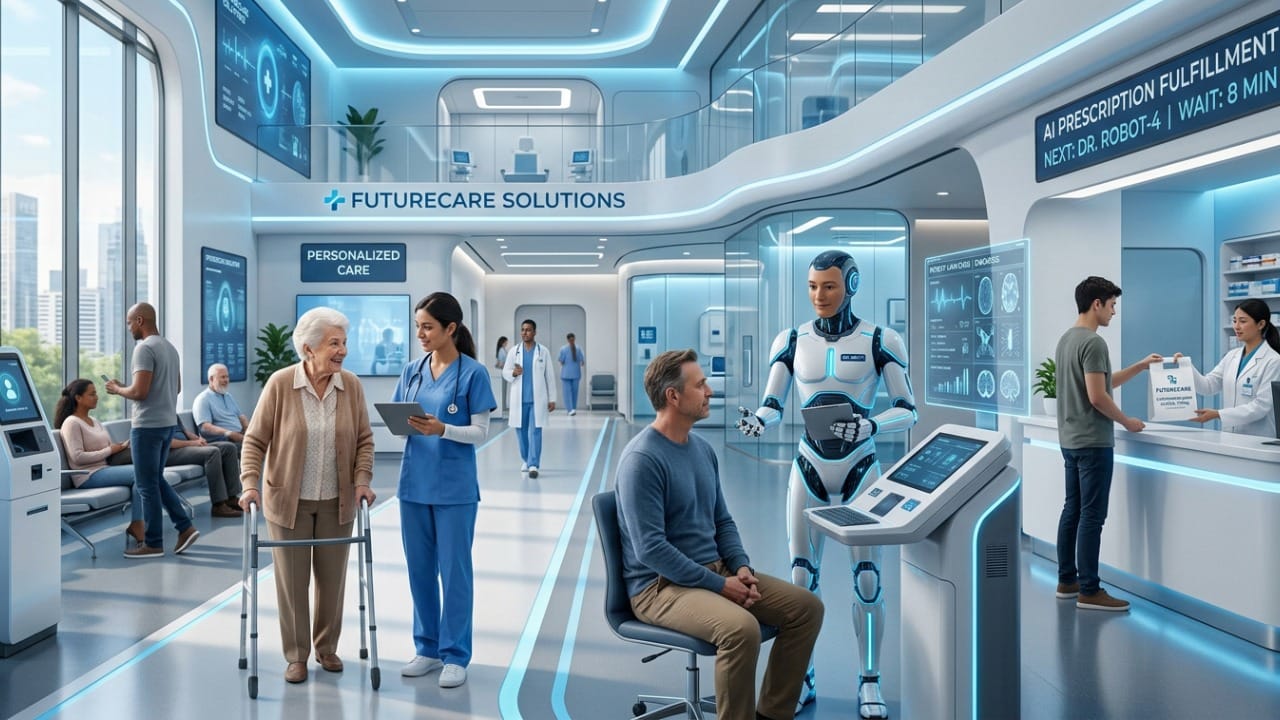
The potential impact is substantial. AI can support earlier disease detection, improve patient triage, optimise hospital capacity, reduce administrative workloads and help doctors make more informed clinical decisions. For private healthcare providers, it can also improve patient booking, insurance approvals, remote monitoring and personalised care.
Dubai’s push towards Agentic AI is highly relevant to healthcare because the emirate’s model is focused on enabling the private sector to adopt and build with emerging technologies.
Rather than treating AI as a government-only transformation project, the programme creates a pathway for companies, start-ups, healthcare providers, insurers, clinics, hospitals and technology vendors to integrate AI into their operations and services.
It is here that Dubai’s private-sector-led AI push could become one of the most visible examples of how an AI-native economy works in practice.
Subscription-based SaaS platforms: Offer tiered AI agent subscriptions to healthcare providers based on patient volume and features, generating predictable recurring revenue with continuous updates.
Pay-per-outcome models: Charge healthcare organisations based on measurable results like reduced readmissions or cost savings, aligning vendor success with client outcomes and performance.
API integration services: Monetise through API access for integrating autonomous agents into existing healthcare systems, charging based on usage, data volume, or endpoints.
Specialised vertical solutions: Develop niche agentic AI for specific medical specialties like radiology or chronic disease management, commanding premium pricing for specialised expertise.
Data analytics monetisation: Generate revenue by selling aggregated, anonymised insights to pharmaceutical companies, researchers, and payers seeking real-world evidence and population health trends.
Agentic AI in healthcare refers to advanced autonomous systems capable of independent reasoning and goal-oriented action, moving beyond traditional data analysis. Unlike passive tools, these AI agents can proactively manage complex workflows—such as monitoring patient vitals in real-time, optimizing clinical pathways, and automating administrative tasks. By integrating autonomous decision-making into digital health infrastructures, Agentic AI enhances operational efficiency and significantly improves patient outcomes through precise, proactive care.
Clinical decision support: Agentic AI systems can autonomously analyse patient data, medical histories, lab results, and imaging to provide real-time diagnostic suggestions and treatment recommendations.
Personalised treatment plans: AI agents can create and dynamically adjust individualised treatment protocols by monitoring patient responses, predicting potential complications, and optimising medication dosages.
Administrative automation: Autonomous agents can handle appointment scheduling, insurance verification, billing processes, and medical coding without human intervention.
Drug discovery and development: Agentic AI can independently design experiments, analyse molecular structures, predict drug interactions, and identify promising therapeutic compounds, accelerating the research process by autonomously testing hypotheses and learning from failed experiments to refine their approach.
Remote patient monitoring: AI agents can continuously monitor patients with chronic conditions, autonomously detecting anomalies, predicting health deteriorations, and alerting healthcare providers or emergency services when intervention is needed alongside personalised health coaching and medication reminders.
Hospital operations optimisation: Autonomous systems can manage bed allocation, staff scheduling, supply chain logistics, and equipment maintenance by predicting demand patterns and optimising resource utilisation in real-time, improving efficiency and reducing costs.
Early disease detection: Agentic AI can proactively screen populations for disease risk factors, analyse patterns across large datasets to identify emerging health threats, and recommend preventive interventions before conditions become critical.
An AI-native government is a governing body that integrates artificial intelligence into its core operations from the outset, using AI to enhance decision-making, service delivery, policy development, and citizen engagement. Rather than treating technology as a secondary add-on, it leverages AI as fundamental infrastructure to build more agile and responsive public institutions. By embedding machine learning and data-driven insights into the fabric of governance, these administrations can predict societal needs, automate bureaucratic workflows, and provide hyper-personalized public services in real-time. This structural shift transforms the state from a reactive entity into a proactive digital ecosystem, ensuring operational transparency and maximum efficiency for all citizens.
Agentic AI in healthcare autonomously performs complex tasks like diagnosing conditions, creating treatment plans, and coordinating care with minimal human intervention. Traditional AI requires human oversight for each decision, serving as a support tool rather than an independent agent capable of end-to-end workflow execution and adaptive problem-solving.
Dubai's AI-native government initiative offers health tech startups opportunities including access to advanced digital infrastructure, regulatory sandboxes for testing innovations, government partnerships for pilot programs, funding support, integration into smart city healthcare systems, and a tech-friendly ecosystem that accelerates AI solution deployment and scaling across the region.
Discover the latest breakthroughs in premier healthcare and connect with industry leaders at WHX Tech. From cutting-edge technologies to transformative solutions, this event is your gateway to shaping the future of healthcare.

WHX Tech
Jan 26, 2027 TO Jan 28, 2027
|Dubai, UAE
Join us at WHX Tech in Dubai—where digital healthcare innovation meets real-world impact. WHX Tech brings together healthcare leaders, tech innovators, and investors to tackle the industry's biggest challenges and shape the future of healthcare.