
Subscribe to WHX Insights newsletter
Stay at the forefront of healthcare trends & innovations
The MENA region is positioned to lead this paradigm shift, with sovereign wealth funds becoming longevity catalysts

Across the MENA region, a profound transformation is underway, where sovereign wealth funds are diversifying, family offices are evolving into multi-generational enterprises, and governments are investing strategically to position themselves as hubs for innovation. Yet amid this economic dynamism, one asset remains undervalued. This asset is biological time.
At Deep Knowledge Group, we believe that ageing, long considered a liability, is, in fact, the most mispriced variable in modern financial models. What if we could treat time not as a diminishing commodity, but as a convertible asset? And what if we could arbitrage biological time against chronological time to create new financial value?
We call this time arbitrage, a strategy whereby an investor purchases a commodity or security now and commits to selling it at a future date, aiming to profit from the price difference between the current market and the expected future value. In traditional finance, arbitrage refers to exploiting inefficiencies between markets to generate risk-free profit. Time arbitrage, in our view, extends this logic into a new domain which is exploiting the discrepancy between the perceived and actual value of human longevity.
Most financial instruments assume a predictable life trajectory, where one retires by 60, and draws down wealth until death. But what happens when that trajectory is extended by decades, thanks to longevity biotech, AI diagnostics, regenerative medicine, and personalised health optimisation?
We create a spread, a gap, between perceived life expectancy and achievable healthspan. That spread is a source of latent value. For forward-looking investors, it becomes a vehicle of asymmetric upside. For governments, it becomes a policy lever. And for MENA’s wealth custodians, it becomes a new class of strategic asset.
The MENA region is positioned to lead this paradigm shift due to several reasons. First, sovereign wealth funds are becoming longevity catalysts. Entities such as the Saudi Public Investment Fund and Abu Dhabi Investment Authority, which manage vast portfolios capable of shaping global markets, can allocate a fraction of assets into AgeTech, preventive healthcare, and longevity biotech. They can capitalise on time arbitrage while also future-proofing national productivity. Research suggests increasing life expectancy by one year, would have an annual benefit of 4-5% of GDP. In a world where adding just five to ten years of healthy life expectancy delivers double-digit GDP gains, the maths is irrefutable.
Second, family offices and intergenerational continuity are becoming more influential. Many of the MENA region’s ultra-high-net-worth families are in their second or third generation. Time arbitrage allows them to optimise succession planning, insurance strategies, and estate structuring around enhanced, data-driven lifespan projections. Biological capital can now be managed like financial capital.
Third, longevity infrastructure has emerged as a new asset class. From longevity clinics and AI-enhanced wellness hubs to national biobanking and precision medicine centres, the MENA region can build new forms of infrastructure where healthcare, data, and wealth intersect. And let us not forget longevity real estate, comprising residential ecosystems designed around AI, that enhances well-being at every stage in life. These are long-term, yield-generating assets in the time arbitrage economy.
Imagine a private bank or an asset manager in Dubai or Riyadh offering a new kind of portfolio service. These could include healthspan-indexed portfolios, which are products that adjust based on predictive models of an investor’s health status, allocating more aggressively or conservatively depending on biological versus chronological age. They might also include longevity bonds, or debt instruments, tied to healthspan outcomes. The healthier the population or investor cohort, the better the return, aligning public health with private gain.
One could also imagine bio-age credit scores, where using AI and biomarkers can determine a person’s biological age, which then influences lending rates, insurance premiums, and investment suitability.
Time arbitrage is a long-term policy vision. Governments in the region are encouraged to integrate it into national planning. Think of longevity cities, urban zones optimised for healthspan, where public investment and regulatory frameworks favour AgeTech, AI healthcare, and preventive lifestyle innovation.
There is also biobanking sovereignty, where investing in regional genomic and biometric data infrastructure ensures that the MENA region populations benefitfrom the personalised medicine revolution. Finally, we may soon see the rise of time-as-a-service platforms, where digital ecosystems offer citizens access to AI-powered longevity optimisation services, incentivised by national health-linked reward systems.
The 20th century treated ageing as decay, something to be hidden, managed, or ignored. The 21st century, particularly in the MENA region, must treat it as potential. Just as fintech redefined the way we think about money, and cleantech redefined the way we think about energy, TimeTech, which is basically the convergence of longevity science, data analytics, and financial engineering, will redefine how we manage our most precious asset, which is the time we have to live well, work well, and build generational legacies.
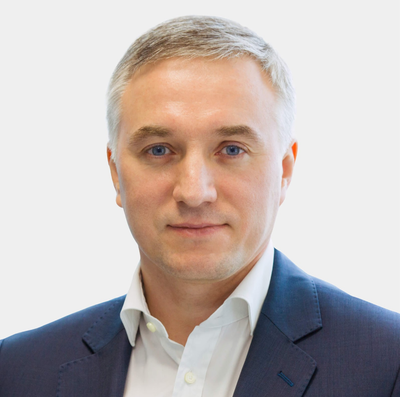
Dmitry Kaminskiy is the General Partner at Deep Knowledge Group

World Health Expo
Jan 25, 2027 TO Jan 28, 2027
|Dubai, UAE
Join us at World Health Expo (WHX) in Dubai — where the world of healthcare meets. WHX connects the healthcare industry's leading researchers, developers, innovators, and professionals all in one place. Whether you're on the hunt for a new product or service, want to learn from world-renowned speakers, or expand your professional network, WHX in Dubai has everything you need to thrive in the Middle East's healthcare industry.