Subscribe to WHX Insights newsletter
Stay at the forefront of healthcare trends & innovations
Quantum computing and AI could help GCC countries fast-track pharmaceutical development
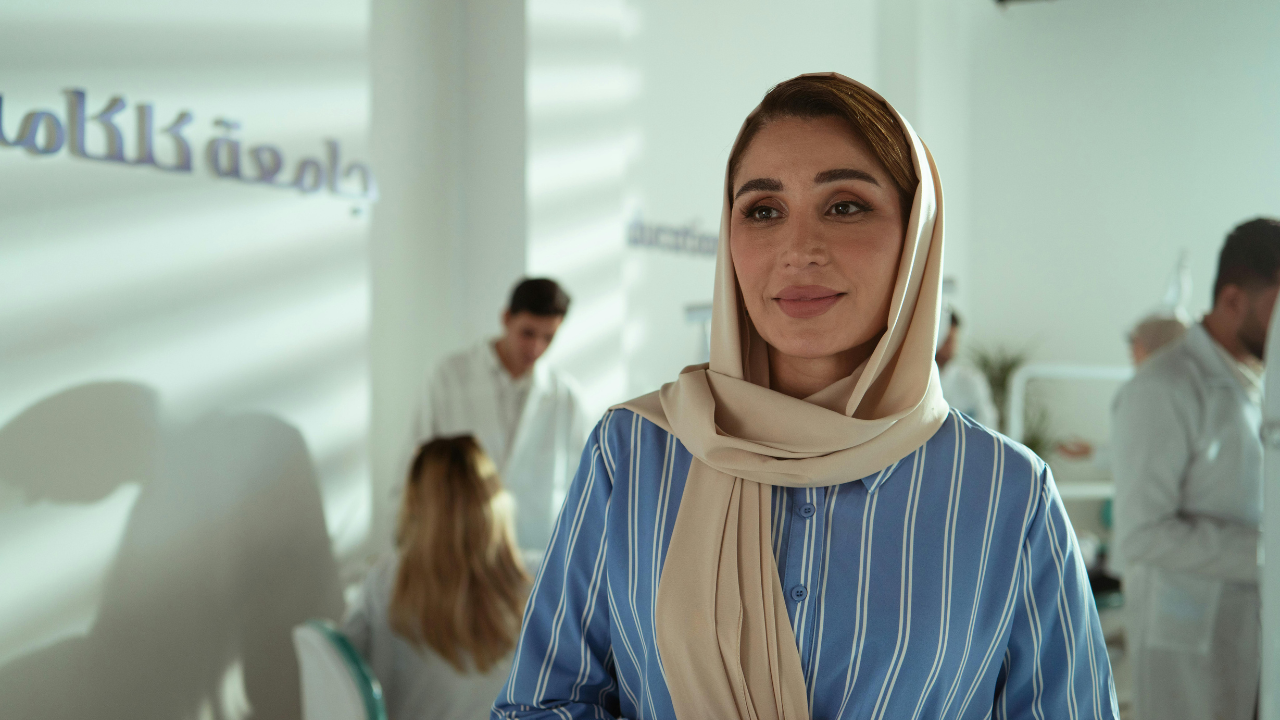
When Jack Hidary, CEO of SandboxAQ, talks about the future of medicine, he isn’t imagining incremental progress, he’s describing a revolution. Speaking exclusively to WHX Insights, Hidary outlined how quantum computing and artificial intelligence could cut drug discovery timelines from decades and billions to months and millions. And he believes the Gulf region, led by the UAE, is perfectly positioned to take advantage.
“When you look at the Gulf countries and the focus on AI, right from G42 here in the UAE to Humane in Saudi Arabia, it means you don’t have to spend 30 years building a biotech industry,” says Hidary. “You could do that in five or seven years. That’s going to be a revolution.”
Hidary’s company, SandboxAQ, is developing one of the world’s first AI–quantum ecosystems for pharmaceutical research. The goal is to simulate biological activity down to the electron level, which is an achievement that has only become possible in the last few years.
“Until now, we’ve never had the superpower to model activity in the body at this scale,” he explains. “The electrons on the outside of a molecule determine whether a drug binds effectively. Understanding that requires quantum mechanics, not Newtonian physics.”
By representing these atomic interactions precisely, quantum simulation allows researchers to predict which drug compounds will work before they enter costly, slow-moving clinical trials, which is where 90% of drugs currently fail.
“We want to use this power to move from a world of failure and guesswork to one of prediction and precision,” says Hidary.
Unlike generative AI systems trained on internet data, SandboxAQ’s models are built on large quantitative models, which involve algorithms grounded in the equations of physics and chemistry. “These are not based on Reddit or Wikipedia,” Hidary quips. “They’re built from the laws of nature themselves.”
The company, backed by NVIDIA, has released two open datasets to accelerate global research. The first, SAIR, contains over five million “Lego blocks” that scientists can use to build new therapeutics and diagnostic tools. The second focuses on catalysts, the compounds essential to producing nearly 80% of materials in the world, think so anything from plastics to pharmaceuticals.
For the Gulf states, the convergence of AI and quantum computing represents more than technological progress, it’s an opportunity to own intellectual property in a sector historically dominated by five countries.
“Ninety per cent of the world’s pharma IP is held in just five nations, and none of them in the Gulf,” says Hidary. “We want to see intellectual property being created and owned right here in the UAE.”
He highlighted the Emirati Genome Programme (EGP) as a cornerstone for such transformation. With population of around one million Emiratis and nine million expatriates, the UAE’s genetic diversity offers a unique testing ground for precision medicine.
“The EGP is critical,” he says, adding, “It gives the UAE the ability to design drugs that address a diverse genetic base, something even the largest Western pharma firms struggle with.”
For global pharmaceutical giants, this technological shift comes at a critical juncture. Blockbuster drugs such as Keytruda, Merck’s $26 billion-a-year immunotherapy, will soon lose patent protection, which is intensifying the need for faster, cheaper innovation.
“The pharma business model today is broken,” says Hidary. “It’s a hit followed by many misses. Even Hollywood has better predictive analytics than most drug companies.”
Quantum-AI convergence could democratise drug development, empowering smaller biotech firms and new entrants in emerging markets to compete on equal footing with the industry’s titans.
For the Gulf, this levelling effect could be transformative. As Hidary put it, “The next generation of life-saving drugs could be created right here in the Gulf — patented here, tested here, and approved here before anywhere else. That’s a true revolution.”
World Health Expo
Jan 25, 2027 TO Jan 28, 2027
|Dubai, UAE
Join us at World Health Expo (WHX) in Dubai — where the world of healthcare meets. WHX connects the healthcare industry's leading researchers, developers, innovators, and professionals all in one place. Whether you're on the hunt for a new product or service, want to learn from world-renowned speakers, or expand your professional network, WHX in Dubai has everything you need to thrive in the Middle East's healthcare industry.