

Subscribe to WHX Insights newsletter
Stay at the forefront of healthcare trends & innovations
Discover the triple-win architecture of green energy in healthcare and learn how to drive system resilience and decarbonisation through clean energy models.

Green energy in healthcare combines clean power sources like solar and wind with energy-efficient building infrastructure to lower carbon footprints, cut operating costs, and maintain uninterrupted power for critical medical operations. Transitioning away from conventional diesel reliance enhances system resilience, safeguards cold chains, and reduces emissions-linked public health risks.
The healthcare sector worldwide is facing a climate paradox. As an institution dedicated to protecting human health, it simultaneously contributes materially to the environmental conditions that drive disease burden, service disruption, and preventable deaths. By reframing healthcare’s relationship with climate, the region can showcase innovation, resilience, and a commitment to safeguarding both people and planet through green energy in healthcare.
The numbers illustrate the scale of the challenge. According to Frost & Sullivan, the global healthcare sector accounted for approximately 4.6% of total greenhouse gas emissions in 2020. These figures highlight the sector’s potential: reducing emissions here translates directly into healthier communities and stronger systems.
Understanding the structure of the healthcare carbon footprint is a prerequisite for effective policy. The footprint is not a stand-alone issue, it is a layered system spanning facility operations, energy procurement, and a vast global supply chain. Not understanding this structure leads to incorrect allocation of capital and missed leverage points.
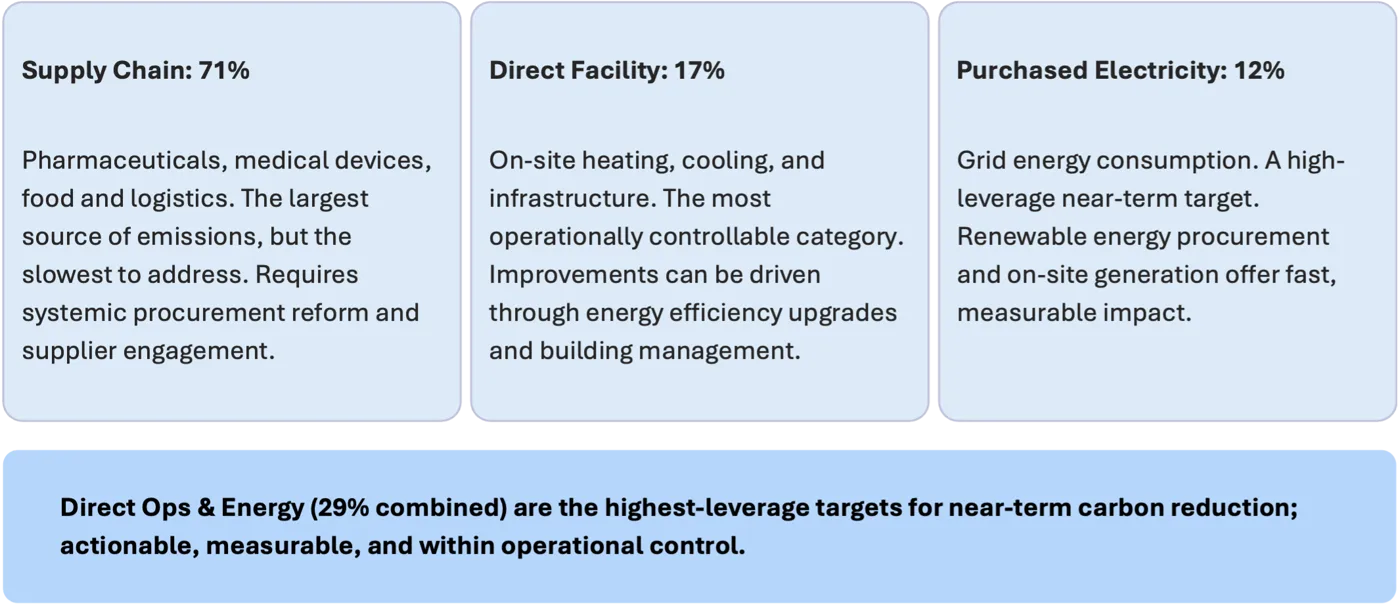
Source: Frost & Sullivan
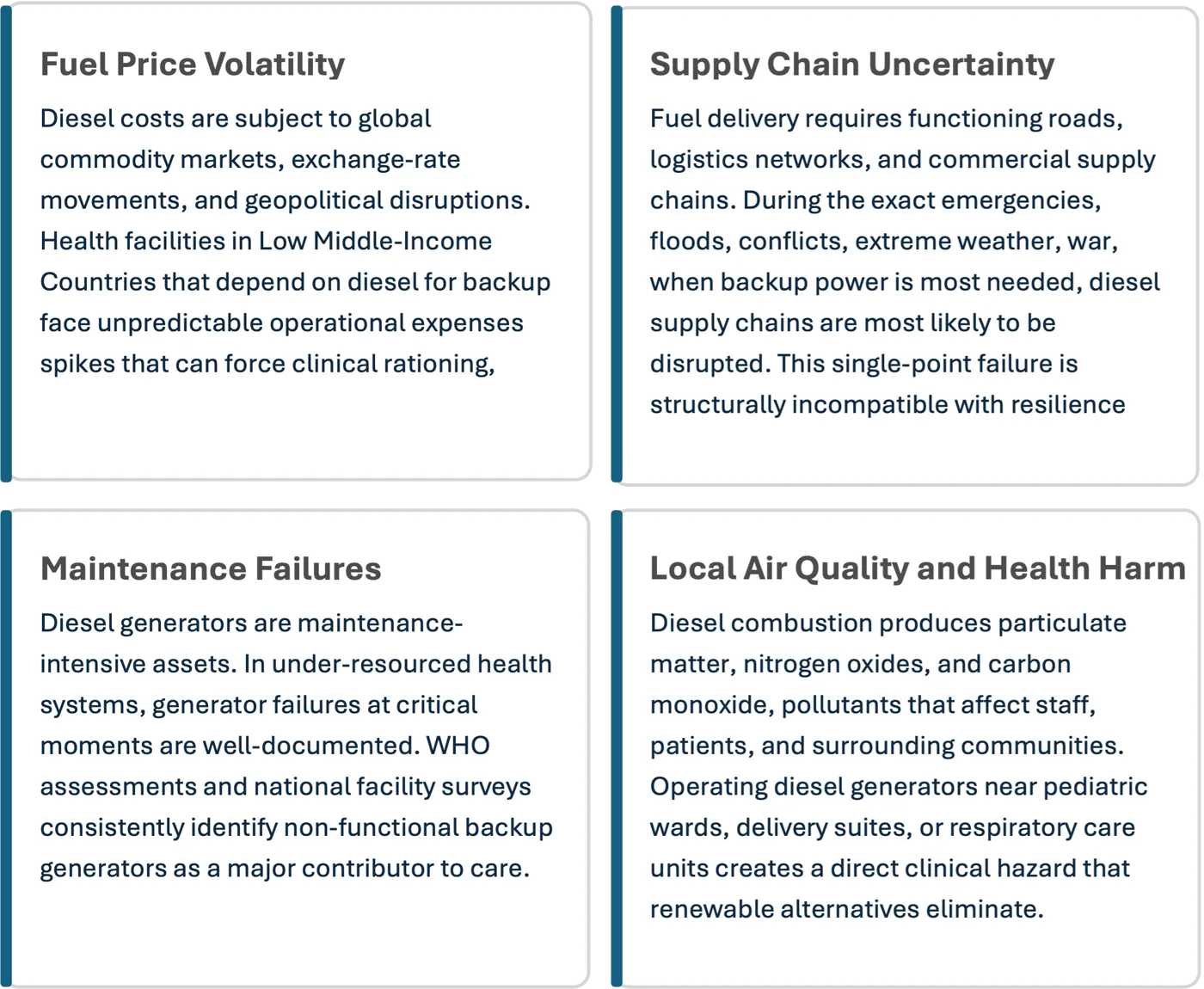
For decades, diesel generators have been the default resilience answer for health facilities in low-resource settings and the fallback option for high-income hospitals during grid disruptions. This model is increasingly inadequate, technically, economically, and strategically, and health system planners who continue to rely on it as the primary backup mechanism are accumulating systemic risk, not managing it.
The structural shift toward green energy in healthcare requires global collaboration, policy innovation, and direct access to cutting-edge clean tech. As the premier global medical conference, WHX in Dubai unites world health ministers, hospital C-suites, and sustainability pioneers to map the future of resilient medical infrastructure. Explore the latest healthcare industry developments, invest in sustainable hospital solutions, and join exclusive expert panel discussions. Register now for WHX Dubai to secure your place among industry visionaries.
Green energy in healthcare should be understood as more than a sustainability measure. It is a triple-win strategy, a lever for decarbonisation, a resilience investment, and a quality-of-care enabler.

For policymakers, the table above reframes the investment question. the relevant comparison is not "green energy cost vs. zero cost", it is "green energy lifecycle cost vs. the full risk-adjusted cost of the conventional model," including fuel exposure, generator maintenance failures, outage-related clinical harms, and emissions-linked health burdens.
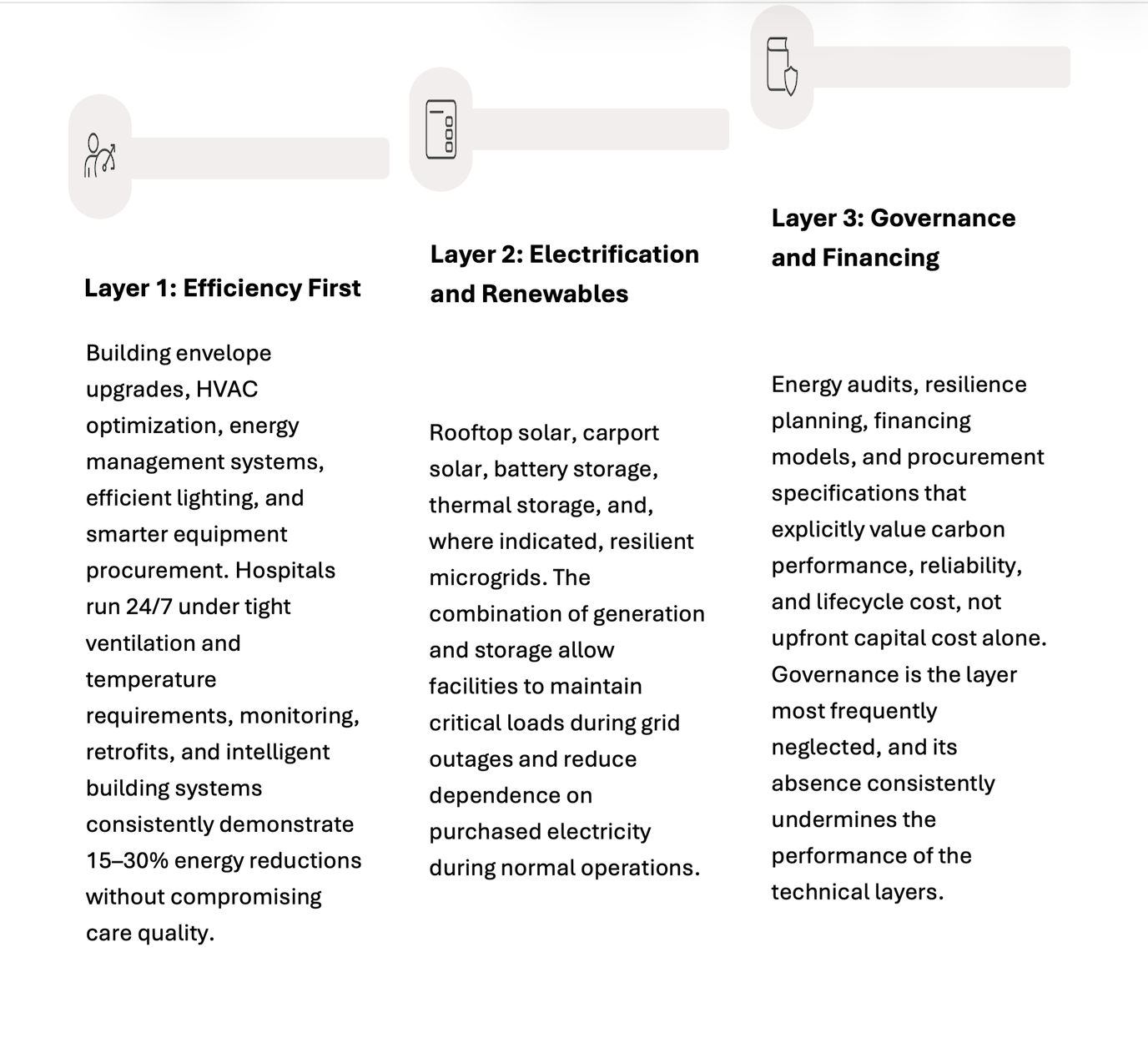
Health facilities need energy systems designed around clinical criticality. The sequencing above embeds clinical prioritisation at step one, ensuring that all subsequent technical choices serve patient safety outcomes.
For global health policymakers, health system planners, and funders, the evidence reviewed here leads to a set of clear strategic imperatives. Green healthcare energy is not just a hospital estate issue. It is a public health intervention, one that supports safe childbirth, vaccination, laboratory diagnostics, oxygen systems, cold chains, water supply, communications, and emergency response across the full continuum of care.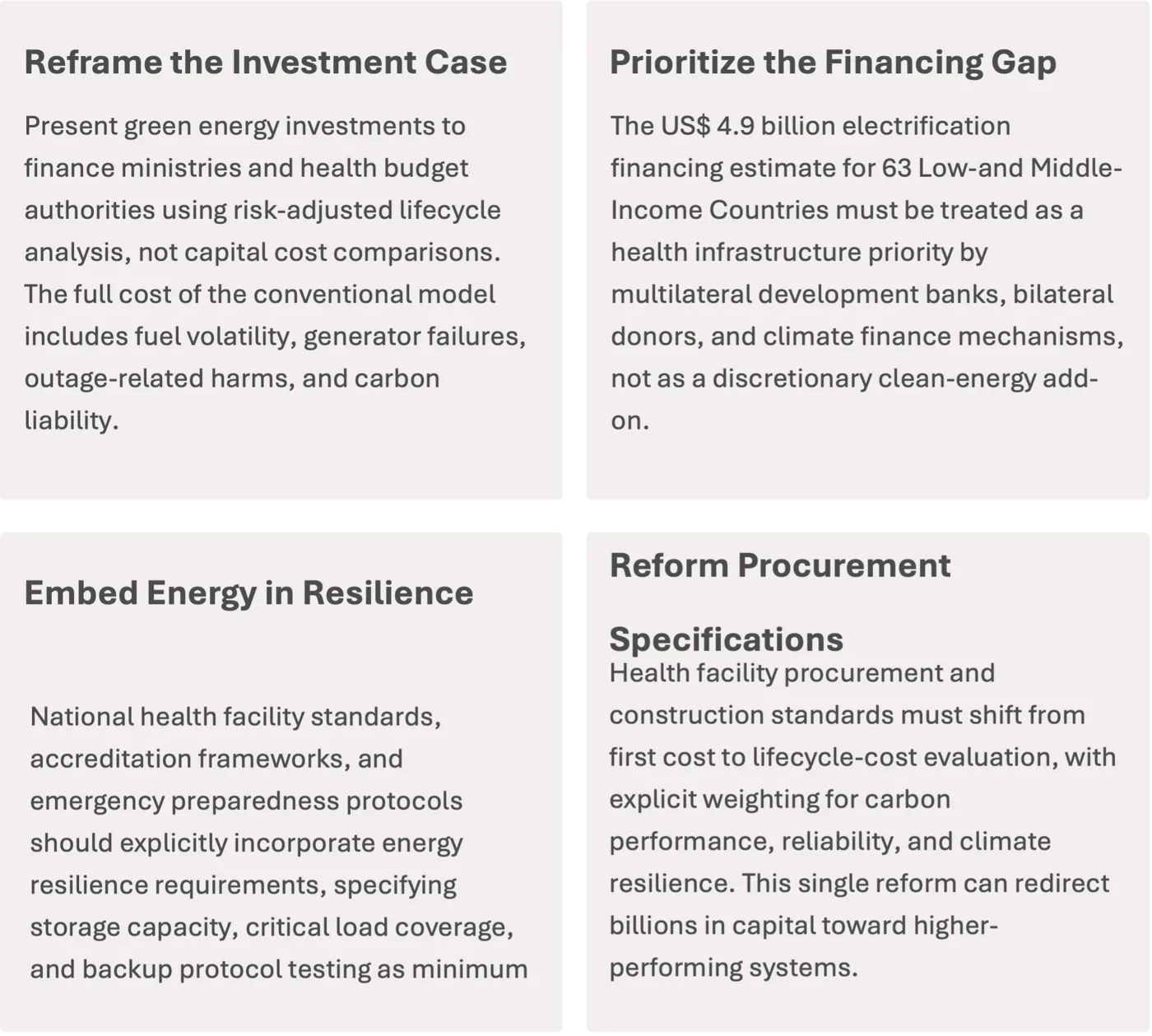
In a period shaped by geopolitical uncertainty, climate shocks, energy insecurity, and pressure on health budgets, health systems that continue to treat energy as a background utility will be increasingly at risk. Those that treat it as strategic infrastructure will be better positioned to protect both patients and system performance.
The global healthcare sector accounted for approximately 4.6% of total greenhouse gas emissions in 2020. Transforming healthcare energy use matters because reducing these emissions translates directly into healthier communities, lower disease burdens, and stronger medical systems.
Sustainability is critical because the healthcare sector faces a climate paradox: as it protects human health, it simultaneously contributes to environmental conditions that drive service disruptions and preventable deaths. Green energy reframes this relationship to safeguard both people and the planet.
Conventional diesel-only backup models accumulate systemic risk rather than managing it. They are technically, economically, and strategically inadequate due to fuel price exposure, generator maintenance risks, and emissions-linked public health burdens during grid disruptions.
The triple-win architecture reframes green energy as more than a sustainability measure. It is a strategic healthcare lever that simultaneously drives institutional decarbonisation, secures infrastructure resilience, and acts as a quality-of-care enabler.
Solar panels combined with microgrids and battery storage systems provide continuous power for critical healthcare infrastructure, such as vaccine cold chains, emergency lighting, and life support systems. They protect facilities against main grid disruptions while lowering overall facility emissions.
Regional initiatives—such as Dubai Health deploying solar carport projects across 26 sites—align healthcare operations with national targets like UAE Vision 2031. Implementing clean energy across medical facilities reduces regional carbon emissions, cuts operational overhead, and strengthens healthcare infrastructure resilience.
Navigating the shift toward resilient, low-carbon medical infrastructure requires cross-sector collaboration and strategic foresight. Visit WHX Sustainability Insights to access expert analyses, case studies, and sustainable solutions shaping the future of green healthcare.

World Health Expo
Jan 25, 2027 TO Jan 28, 2027
|Dubai, UAE
Join us at World Health Expo (WHX) in Dubai — where the world of healthcare meets. WHX connects the healthcare industry's leading researchers, developers, innovators, and professionals all in one place. Whether you're on the hunt for a new product or service, want to learn from world-renowned speakers, or expand your professional network, WHX in Dubai has everything you need to thrive in the Middle East's healthcare industry.